The state of midwifery in Australia: Midwifery Futures

A summary of the research outputs from the Midwifery Futures project.

A summary of the research outputs from the Midwifery Futures project.

A recent study examined intermittent auscultation during labor in various UK birth settings. It found that local policies exist in most units, but training and competency assessments were inconsistently implemented. The reliance on certain fetal monitoring devices and practices raises concerns, as does the use of outdated training programs and practices.

The paper by Westergren et al. (2025) examined how gender norms played out in birth, emphasising the negative impact of “well behaved” women and midwives on birthing experiences.

The paper investigates the relationship between umbilical cord size and fetal heart rate patterns during labor. Findings suggest that less Wharton’s jelly correlates with repetitive heart rate decelerations. However, misconceptions about fetal decelerations and their impact on fetal health were noted, along with a lack of evidence for suggested monitoring interventions.

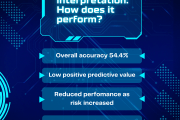
The Dawes Redman system, used for CTG monitoring in pregnancy, aims to predict adverse outcomes. Recent research indicated a low overall accuracy of 54.4%, with high negative predictive values but low positive predictive values, especially in high-risk scenarios, questioning its effectiveness and endorsement in clinical guidelines.

Fetal heart rate monitoring often shows abnormal patterns that don’t reflect an underlying problem for the fetus. Research on fetal blood sampling has been limited. A recent study found weak correlations between fetal blood pH levels, umbilical cord pH levels and Apgar scores. It is vital that further research takes into account how fetal physiology actually works, rather than repeating inaccurate assumptions.

Central fetal monitoring systems gather data from CTG machines and show it in a central place. While aimed at improving outcomes this has not been proven in research. Midwives reported disruptions in response to what was seen at the central monitor, leading to altered care practices focused on documentation over support for birthing women. It is time to pause and think, rather than continue to accept the introduction of these systems.

A Japanese research team compared human and artificial intelligence performance in analyzing CTG data to predict perinatal asphyxia. Clinicians slightly outperformed AI in accurately diagnosing affected babies. However, limitations raise concerns, emphasising the essential role of healthcare professionals over machines in maternity services.

Clinical Decision Support Systems (CDSS) aim to enhance maternity care by improving decision-making consistency and safety. A systematic review points out concerns over potential biases and the effectiveness of CDSS amid varying clinical contexts. More robust research is needed.

Today’s post reflects on a 1959 trial concerning “fetal distress”. It highlights findings that meconium was a critical indicator of poor outcomes, while abnormal fetal heart rates weren’t reliably predictive. Should we be reevaluating current obsessions with CTG use and focusing on alternative clinical markers?