Routine umbilical cord gas analysis – is it worth it?

Routine cord blood gas analysis – harmful or helpful?

Routine cord blood gas analysis – harmful or helpful?

Continuous fetal monitoring (CFM) technologies are currently being developed for high-risk pregnancies. CFM includes monitoring fetal heart rate and movements. There are concerns about signal quality, and there is an urgent need for research to demonstrate whether CFM actually helps. What impact will it have on women and maternity professionals if it is implemented more widely?

The Dublin randomized controlled trial published in July 1985 aimed to determine the effectiveness of continuous fetal monitoring (CTG) over intermittent auscultation during labor. The trial found no significant differences in outcomes for babies. Despite its findings, CTGs remained widely used. It’s time to do something about that.

A recent Finnish study explored HIE and its preventability with CTG use. Findings suggest that timely interventions may have avoided HIE for one in five women with an affected. However, this study does not establish CTG superiority over intermittent auscultation for monitoring fetal health.

Maternity professionals face pressure to continuously record fetal heartbeats, leading to interventions that prioritise monitoring over women’s birth priorities. Evidence suggests that uninterrupted heart rate tracing does not improve neonatal outcomes and can increase complications. The focus should be on overall fetal wellbeing rather than solely on heart rate data accuracy.

In a trial comparing fetal blood sampling to digital fetal scalp stimulation for assessing fetal wellbeing, recruitment fell short, concluding early after just 534 participants. Despite showing a significantly lower caesarean section rate with scalp stimulation, the small sample limits the findings. The irony of guidelines undermining evidence development is discussed.

This week I explore flawed beliefs in the effectiveness of fetal monitoring technology through a circular argument. It highlights three steps: assuming success when bad outcomes don’t occur, blaming individuals when they do, and declaring some cases unavoidable. It’s time the research to settle this was done.

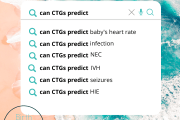
A recent review examined the relationship between abnormal heart rate patterns in CTG monitoring and various neonatal outcomes. While some links were identified, particularly with hypoxic ischaemic encephalopathy, overall connections were weak. The evidence suggests CTG monitoring may not be as clinically useful as presumed, prompting calls for alternative monitoring methods.

The development of the cardiotocograph (CTG) in obstetrics evolved from earlier fetal monitoring methods over a century. While intended to enhance fetal safety, its integration shifted focus towards legal liability and technology reliance, often undermining maternal care. Concerns about research integrity and the effectiveness of CTGs suggest the need to reassess their use in maternity care.

Does CTG misinterpretation harm babies? Or is something else going on?