Twenty fetal monitoring myths that won’t go away

Myths about fetal heart rate monitoring are plentiful. Here are twenty of them. Let me know if there are others you would like to see me tackle!

Myths about fetal heart rate monitoring are plentiful. Here are twenty of them. Let me know if there are others you would like to see me tackle!

In 2023, Australia recorded 218,099 births, with a rising cesarean section rate, now exceeding 40%. Induction rates and maternal age increased, while the perinatal mortality rate also rose to 11.0 per 1,000. Despite efforts to enhance birth safety, outcomes show concerning trends, necessitating reconsideration of the high rates of intervention.

The UK has experienced ongoing maternity care crises. A study of UK maternity services showed that quality ratings did not correlate with maternal and neonatal outcomes. It is time to question the effectiveness of current quality assessment processes and measures.
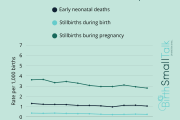
In 2023, the MBRRACE-UK report showed an 18.3% decline in birth rates since 2013 with minimal improvements in mortality rates. Despite investment in maternal care, the rate of change in perinatal mortality rates is very slow and subject to outside influences. There is a strong need for effective intervention strategies.

The Dawes Redman system, used for CTG monitoring in pregnancy, aims to predict adverse outcomes. Recent research indicated a low overall accuracy of 54.4%, with high negative predictive values but low positive predictive values, especially in high-risk scenarios, questioning its effectiveness and endorsement in clinical guidelines.

Today’s post reflects on a 1959 trial concerning “fetal distress”. It highlights findings that meconium was a critical indicator of poor outcomes, while abnormal fetal heart rates weren’t reliably predictive. Should we be reevaluating current obsessions with CTG use and focusing on alternative clinical markers?

Why did the Each Baby Counts program not made a difference?

Short term thinking is a problem in maternity care. It seems to me as though a good five minute Apgar score, or normal cord blood gases, is the primary end point in far too many studies. These things are not inappropriate outcomes to aim for, but they aren’t enough and can end up meaning professionals in clinical practice lose sight of the big picture. As a parent and birthing woman, […]

Today’s post summarises the evidence about the use of admission CTGs.

Going to sleep lying flat on the back (supine position) has been linked to a higher rate of stillbirth between 28 weeks of pregnancy and the start of labour, with the chance rising closer to the end of pregnancy (McCowan, et al., 2017). Because of this, many countries now issue public recommendations about going to sleep in a side lying position in late pregnancy. The McCowan study also showed a […]
 Birth Small Talk