Birth Small Talk

Fetal monitoring information you can trust

Tag Archive for ‘Artificial intelligence’

Why artificial intelligence systems for fetal monitoring are so seductive to healthcare systems (and why that is a huge ethical problem)

Fetal heart rate monitoring traditionally involves professionals interpreting patterns, but technology has introduced complex, expensive systems aimed at improving outcomes. Despite this, there are ethical concerns regarding women’s consent and data use. The focus appears to prioritize cost reduction for healthcare systems over meaningful enhancements in maternal and fetal care outcomes.


Continue Reading →

Human rights and artificial intelligence in healthcare

Recent publications on fetal monitoring highlight the rise of artificial intelligence (AI) in interpreting CTG recordings. While advancements promise decision-support systems, rights issues remain. Ploug and colleagues emphasize the need for regulations in AI-driven healthcare to protect people’s rights, urging the integration of these considerations into technology development from the outset.

Continue Reading →

Humans are still better than computers

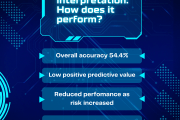
A Japanese research team compared human and artificial intelligence performance in analyzing CTG data to predict perinatal asphyxia. Clinicians slightly outperformed AI in accurately diagnosing affected babies. However, limitations raise concerns, emphasising the essential role of healthcare professionals over machines in maternity services.

Continue Reading →

Dawes Redman system

A student in my Fetal Monitoring for Maternity Professionals course asked me about this recently – and I realised I had never written about it, despite having promised to do so a few times! This is for Natalie, with gratitude. What is the Dawes Redman system? As an Australia maternity care provider, I have never encountered the Dawes Redman system in clinical practice. Its use seems to be widespread in […]

Continue Reading →

Would you trust a computer to decide when to do a caesarean section?

What is epistemic trust? Imagine for a moment that computer interpretation of the CTG has become so good that it now significantly outperforms skilled maternity professionals ability to detect impending fetal hypoxia. As a maternity professional, you can’t see what the computer is seeing, because your brain simply lacks the capacity to interpret the trace the same way the computer does. What criteria would need to be met for you […]

Continue Reading →