Are we monitoring or not? Language matters.

When is fetal monitoring not fetal monitoring? #EFM #CTG #LanguageMatters
Cardiotocograph monitoring

When is fetal monitoring not fetal monitoring? #EFM #CTG #LanguageMatters

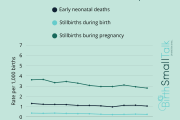
In 2023, the MBRRACE-UK report showed an 18.3% decline in birth rates since 2013 with minimal improvements in mortality rates. Despite investment in maternal care, the rate of change in perinatal mortality rates is very slow and subject to outside influences. There is a strong need for effective intervention strategies.

A recent study examined intermittent auscultation during labor in various UK birth settings. It found that local policies exist in most units, but training and competency assessments were inconsistently implemented. The reliance on certain fetal monitoring devices and practices raises concerns, as does the use of outdated training programs and practices.

The post examines the misconception that early decelerations in fetal heart rate indicate head compression and normal oxygen levels, tracing this belief to Edward Hon’s research in the 1950s, and unconsented experimentation on women. Newer studies suggest these decelerations may signal hypoxia, revealing flaws in current fetal monitoring guidelines.

Maternity professionals face pressure to continuously record fetal heartbeats, leading to interventions that prioritise monitoring over women’s birth priorities. Evidence suggests that uninterrupted heart rate tracing does not improve neonatal outcomes and can increase complications. The focus should be on overall fetal wellbeing rather than solely on heart rate data accuracy.

The paper by Westergren et al. (2025) examined how gender norms played out in birth, emphasising the negative impact of “well behaved” women and midwives on birthing experiences.

The paper investigates the relationship between umbilical cord size and fetal heart rate patterns during labor. Findings suggest that less Wharton’s jelly correlates with repetitive heart rate decelerations. However, misconceptions about fetal decelerations and their impact on fetal health were noted, along with a lack of evidence for suggested monitoring interventions.

CTG monitoring during vaginal birth after caesarean section (VBAC) is often deemed essential, but evidence suggests it does not prevent uterine rupture. Abnormal fetal heart rate patterns indicating rupture can also occur for other reasons. Therefore, CTG is not mandatory; women should choose their monitoring method based on individual circumstances.

The design of the very first RCT about CTG monitoring is interesting, and it raised a question which we really haven’t ever answered fully. Does the use of CTGs create the very problem they are meant to prevent?

The Dawes Redman system, used for CTG monitoring in pregnancy, aims to predict adverse outcomes. Recent research indicated a low overall accuracy of 54.4%, with high negative predictive values but low positive predictive values, especially in high-risk scenarios, questioning its effectiveness and endorsement in clinical guidelines.